Writer’s overwhelm and the power of acceptance

Photo by Eugenio Mazzone on Unsplash

This week I have been busy with my Focused Flow app development tasks and learning how to make videos to promote my app when it’s finished. Therefore, the blog hasn’t been updated. I’ve thought about it often, but each time I sat down with the laptop and opened the page I experienced the common problem of overwhelm- that experience of having too much to do, too little time, and the temporary jamming of the cognitive processing required to write. This hasn’t been made any easier by my seasonal problem of hay fever that drains my energy and leaves me feeling unmotivated.

This week I’ve also been working closely with two academic clients who’ve reported a similar problem with overwhelm clogging up their cognitive gears and leaving them with a sense of dread. So, overwhelm seems to be this week’s issue all round, and is a common problem for academic writers who have to filter through piles of notes, references and ideas, focus them down into a coherent narrative and structure their research into a written paper.

While working with my coaching clients I’ve discovered one size definitely does not fit all when managing writer’s overwhelm. As I develop and refine the Focused Flow model, managing overwhelm appears to be key to overcoming procrastination and dissolving writer’s block too. In my short promo video, I focus on the problem of overwhelm that strikes when we’re faced with piles of notes, our mind is firing off in all directions with lots of ideas, focus deserts us and taking action by writing seems almost impossible.

One strategy for overcoming overwhelm is ‘snack writing’- making a pledge to jot down around 200-300 words a sitting, using cognitive defusion to stay on track should the inner critic emerge and start trying to edit what you’re writing. Another is to use acceptance strategies to make space for the discomfort of overwhelm and stop struggling against it. My recent experience of overwhelm led me to experiment with some acceptance strategies by leaning into the uncomfortable sensations I was experiencing in my body right around my lower abdomen- a sense of restlessness coupled with dread- and then once I had a clear visualisation of it, I stepped back from my thoughts about it using defusion strategies- specifically ‘I notice I having the thought that I can’t do all of this’. In the video below from ‘Therapy in a Nutshell’ a multitasking mother, therapist and writer discusses her strategy for overcoming overwhelm.

I did something similar, by making a list of tasks for the day and taking action, despite the feeling of dread I was experiencing deep in my gut. Overwhelm was blocking my productivity just as it had with my clients. I had too much to do in too little time, but really the timeline I had imposed on myself pointed to unrealistic goal setting. The solution was to review my goal setting, prioritise my tasks, and set more realistic goals that I could manage- not so challenging they’d cause anxiety and not so easy I’d get bored. This is key to dropping into the flow state, establishing focus, and optimising productivity.

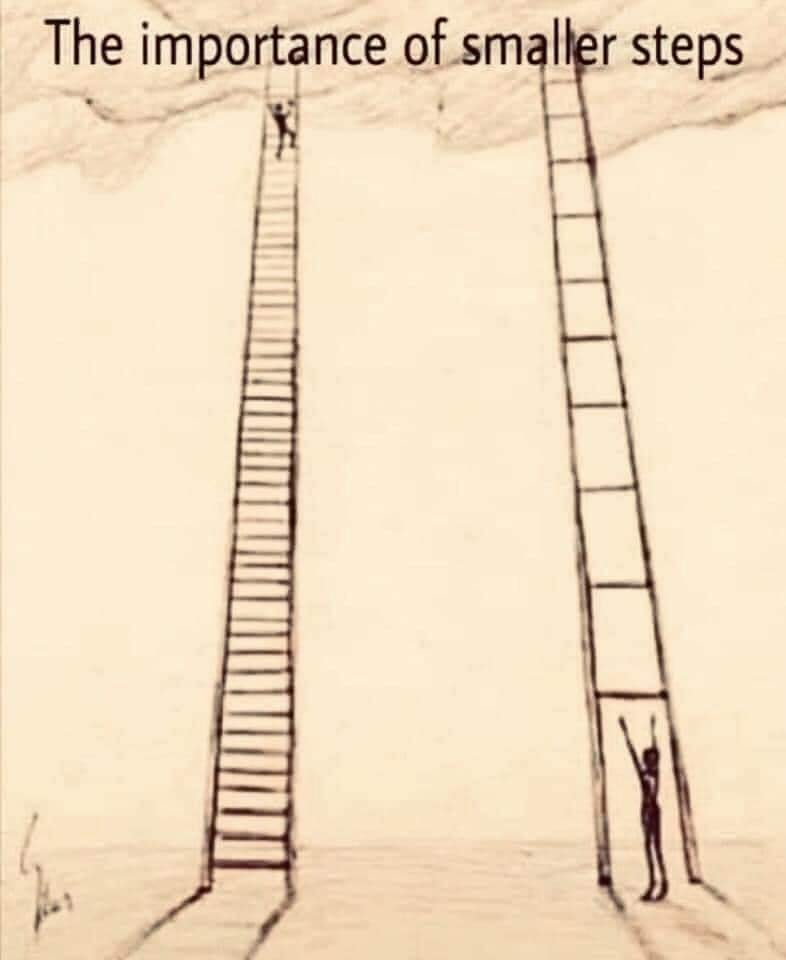
I also bought a special journal to help me reorganise myself and record what I learn on a daily basis… including doodling and mind mapping my creative process and noting down what helps me to drop into my flow state. The pathway to the flow state is unique to each individual. I have discovered that leaning into uncomfortable sensations and emotions, defusing from my thoughts about them, while making bite sized daily short-term goals helps me to dissolve overwhelm and reorientate to the values driving my writing process. I had to remind myself not to underestimate the power of taking small steps to completing what appear to be formidable tasks- like building an app for the very first time.
In the video below, Russ Harris describes the ‘chess board metaphor’ to explain how acceptance and defusion combined can unhook us from inner struggles like overwhelm or anxiety and give uncomfortable feelings the space to move. When we become like the chess board rather than the chess pieces, we step back and observe our inner state rather than freezing in the face of overwhelm and the sensation of dread that accompanies it. Instead, we can embrace the power of the witness state and make space for the overwhelm to shift and dissolve.

Today, I’ll return to building the Focused Flow app after taking a short break to reorganise myself. The experience of overwhelm has receded but I’m aware it has the potential to return if I lose my focus. Finishing this blog post is one item crossed off my list for today! Without my experience of overwhelm the past few days, it’s unlikely it would have been written. As ever, I turn to my inner experience to guide my investigation of the writing process. I hope you find my reflections and the video resources I’ve shared useful. I look forward to any comments below or email me on info@focused-flow.com if you have questions you’d like to discuss in private.

Cognitive defusion and ditching the internal editor

Photo by Quentin Ferrer on Unsplash

In my previous post I touched on what mindfulness is and isn’t by debunking some myths about mindfulness. Acquiring mindfulness skills doesn’t require a meditation practice, in fact, meditation is only a small subset of mindfulness practices. I would never recommend writers take up a seated meditation practice given the act of writing involves sitting for very long periods of time in isolation. Instead, the Focused Flow approach involves developing ‘mindfulness on the move’ and applying these mindfulness skills to overcome internal obstacles such as self-doubt, procrastination, and a harsh inner critic that often tries to edit the work before it’s even been drafted! A combination of these obstacles can even lead to writer’s block as described in the previous article.

To drop into the flow and optimise your productivity, it is essential to let go of the inner critic and maintain your focus on your writing goals. To enter the flow state, your writing goals should be challenging, but not so difficult they induce overwhelm, and not so easy so that writing becomes boring. For each writer, setting the scale of the challenge required will be different, but once you enter the flow state, the act of writing becomes a source of vitality and joy. Sometimes, faced with a blank page and a whole lot of notes or ideas, as soon as we begin typing, the inner critic pays us a visit and starts suggesting edits and changes before we’ve even completed the first sentence. Often, writing coaches refer to this intrusive commentary as the ‘internal editor’. Rather like the ‘I’m not good enough story’ mentioned in the previous article, the ‘internal editor’ can undermine our confidence and prevent us from getting off the starting block if we ‘fuse’ with the thoughts that arise and begin to believe in them. One alternative is applying mindfulness skills to detach from the internal editor and continue writing anyway.

According to the ACT model, we can learn new skills termed ‘cognitive defusion’ techniques which evolve from a mindful awareness that you are NOT your thoughts, you are NOT your feelings, and however overwhelming these internal experiences are, you CAN still choose to behave in ways consistent with your values and goals. It takes time to learn these skills, and it isn’t an easy or comfortable process at first. It involves facing the shadows that haunt your mind and directing a bright light onto them to expose the fears lurking there- including uncomfortable drivers of avoidance common to writers such as harsh self-criticism, severe self-doubt, and the dread of failure or rejection. When my coaching clients start learning these skills, they may make mistakes and give in to reactivity at times, but they do progress.

The path of progress is not straight, or linear, but cyclical. There are ups and downs. This is perfectly normal. Gaining these skills involves uprooting a lot of well-established coping mechanisms that have outlasted their usefulness. They may have had a tight grip on your mind, heart and body for a long time. So, if you decide to give these exercises a try, you must be kind to yourself when you fall back into old patterns, if you do. Once you recognise this has happened, that is an act of mindfulness! You then make amends with yourself, dust yourself down, and carry on. Any instances of reactivity or overwhelm will decrease in intensity over time. These techniques are designed to help you detach from the internal editor that plagues many writers, by helping you to undermine the power of unhelpful thoughts and arresting the development of overwhelming feelings so they no longer control you. In this post I’m going to suggest two simple strategies for defusing from the internal editor that will enhance your ability to drop into your flow state over time.

1. I am having the thought that….

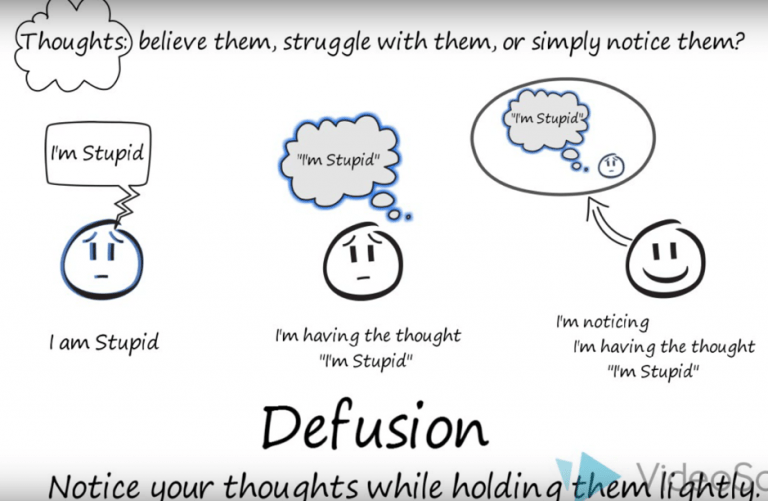
First, bring to mind a thought you have often when you try to write that troubles or upsets you. It might be a self-defeating thought that prevents you from getting going on a project like ‘I’m too stupid,’ ‘I’m not good enough’, ‘I can’t do this,’ or some other kind of self-limiting thought. Next, keep that thought in mind and focus on it intensely as you can for a few seconds. Notice how it makes you feel. Notice the sensations in your body, your breath, your heart rate, and your emotions. Use mindful awareness to really register how thinking this thought affects you bodily, emotionally. Jot these observations down. Next, take the thought and insert in front of it ‘I am having the thought that…’ Run it through your mind like this for a few seconds. Notice how this makes you feel in the same ways as above… use mindful awareness to really focus on any differences between how you feel now, and how you felt before. Jot these observations down.

Using the same self-limiting thought again, or a different one if you prefer, keep that thought in mind and focus on it intensely as you can for a few seconds. As above, notice how it makes you feel. Jot these observations down. Next, take the thought and insert in front of it ‘I notice I am having the thought that…’ Run it through your mind like this for a few seconds. Notice how this makes you feel in the same ways as above… use mindful awareness to really focus on any differences between how you feel now, and how you felt before. Jot these observations down. If you notice few if any differences, try the exercise again with another thought.

2. Thanking your mind

Another one that works for me, although it might seem a bit eccentric at first, is thanking my mind. This exercise is explained by ACT coach Russ Harris in the video below.

There are many other cognitive defusion strategies that can be used to detach from the internal editor. You could try Googling the term and finding other variations or look into my book that specifically adapts these exercises for writers. Try them and let me know how you get on. You can comment on the blog forum at Focused Flow or email me at info@focused-flow.com. I am building a unique set of resources for writers and welcome your contributions.

What is writer’s block?

According to the ACT approach, experiential avoidance is always at the foundation of the internal obstacles that arise and prevent us from achieving our goals. This is the same for any kind of blockage, including writer’s block. Experiential avoidance in writers results in us behaving in ways that undermine the achievement of our writing goals. The ACT hexaflex is designed to overcome experiential avoidance and increase psychological flexibility through the acquisition of new cognitive and behavioural skills. However, before us writers can overcome obstacles to achieving our writing goals, we need to understand the avoidance strategies we use, albeit not consciously, and become much more aware of how our thoughts, feelings and sensations lead to avoidance behaviour- and even that dreaded writer’s block.

The Focused Flow model approaches writing coaching by establishing values-driven writing goals, and then taking an inventory of obstacles that arise when a writer approaches their writing task. For each person, the obstacles that arise will be unique. Yet there are some common problems that many writers face when they approach a writing task. One is procrastination, which tends to be driven by overthinking the writing task, leading to uncomfortable sensations or feelings and the perpetual delay of writing to avoid this discomfort. When faced with a blank screen or page, many experience overwhelm due to overthinking the task ahead which puts the brake on the writing process. Procrastination helps writers to avoid this common experience of writer’s overwhelm. From an ACT perspective, Russ Harris calls this behaviour an ‘away move’ because procrastination diverts us away from the achievement of our goals.

I have noticed that before I sit down to write about any aspect of the writing process, I seem to experience the very problem I’m thinking of writing about. For example, today, I intended to write a blog post about experiential avoidance- and I finally started writing about it after 5pm, but not before cleaning my apartment, sorting out the laundry, ordering my food shopping, taking out the trash, giving myself a facial, and looking at various freelance writing and editing opportunities to boost my income across about twenty websites. This resulted in a growing sense of agitation and even dread. I was aware I was avoiding today’s writing goal, yet there I was, saying I could coach others to achieve theirs! Cue the emergence of the internal critic in full self-condemnation and judgement mode… ‘you haven’t got what it takes, you’re out of your depth, you should stick to editing, who’s going to take you seriously? Why would anybody part with their hard-earned money to learn from somebody like you?’ And so on and so on… which is my version of what ACT practitioners term the ‘I’m not good enough story’.

So, I connected to that experience, and became aware I was feeling uncomfortable and agitated. I connected to the sensations in my body- a kind of dread in the pit of my stomach, a heaviness in my heart that I associate with disappointment, not about a cancelled event, but disappointment with myself. I realised I was at what Russ Harris calls ‘the choice point’, like a fork in the road, with one path taking me away from my writing goals- by going for a walk, having a glass of wine, or finding some other task such as doing a tiny bit of washing up that could easily wait. My ‘I’m not good enough story’ was kicking off along with all the uncomfortable feelings that accompany it, and I had to choose whether to get hooked into the story or remain aware of my uncomfortable feelings, sit down, and just start writing instead. This short video illustrates ‘the choice point’ visually.

I became aware I was at my choice point by connecting to the present moment and noticing my thoughts, feelings, sensations and the urge to indulge in further procrastination, more avoidance and ‘away moves’. According to the ACT model, this dropping into awareness and connecting to the present moment is termed ‘mindfulness’. By becoming more mindful, I was able to choose a ‘towards move’ while remaining aware of my discomfort, picking up my laptop, sitting down and starting to type.

Next, during the writing process, I remembered the problems I’d encountered with potential coaching clients who’d queried the use of mindfulness as a solution to overcoming obstacles to writing. So much so, that I’d been careful to remove the term ‘mindfulness’ from my promotional material and website pages. Then, my mind began to comment negatively on my use of the term mindfulness. The reason? Almost all my potential clients were put off by the idea of having to meditate in order to write! They had associated mindfulness with meditation. I was surprised, but then I’ve been an ACT practitioner for eleven years and had chosen to practice ACT as a coach because it doesn’t involve meditation! I’d previously trained in other mindfulness-based therapies- MBCT and MBSR -which do require a regular meditation practice. This requirement led to problems for some of my peers who found making time to meditate difficult, and had undermined their progress with the approach. Then, along came ACT- a mindfulness-based active coaching approach that required no meditation- so I jumped into further training then began using it with a lot of success, especially with writers in my retreat house in Sri Lanka.

So, I decided to ignore my mind telling me it was a bad idea to discuss mindfulness in this article about the writing process. There are several myths about mindfulness, but instead of avoiding using the term I decided it’s time to do some myth busting instead. Take a look at the short video below by the ACT coach Russ Harris.

Thanks to my mindfulness skills, I was able to choose to behave in a way that achieved today’s writing goal, despite all the uncomfortable thoughts and feelings that arose when I thought about sitting down to write. In addition to connecting to the present moment and noticing the thoughts, feelings and sensations driving my procrastination, I decided to let them be there and unhooked from the impulse to avoid them. In the ACT hexaflex model, these further skills in mindfulness are termed ‘acceptance’ (allowing uncomfortable aspects of our experience to just be there) and cognitive defusion (unhooking or refusing to ‘fuse’ with the ‘I’m not good enough story’).

The next post will discuss these additional mindfulness skills in detail. Acceptance and cognitive defusion enable us to choose ‘towards moves’ by making space for us to enter the flow state, maintain our focus, and achieve our writing goals. Thankfully, mindfulness helped me achieve my writing goal today, otherwise you wouldn’t be reading this post now! If you like my investigation of the writing process, please click and subscribe in the sidebar to receive notifications by email. My posts will be full of tips and techniques to help overcome obstacles to all types of writing in the coming weeks ahead.

Values-Driven Writing Goals

When I conduct my first coaching session with writers, I introduce them to the ACT approach that I have integrated into the Focused Flow model. ACT is a collaborative coaching intervention that was developed by Professor Steven Hayes as he struggled to overcome his own personal challenges following his divorce. Previously a highly competent public speaker and lecturer, Steven found himself freezing up when he went to speak and experiencing panic attacks which quickly developed into a full-blown panic disorder. As a psychologist, he tried all the standard approaches to deal with his condition, but none seemed to resolve his problems entirely. You can read more about how he struggled to overcome his problems and how this led him to develop the ACT approach here.

The ACT approach is based on a six staged process that is represented by the hexaflex.

The Hexaflex

I came across this approach after training in the more traditional mindfulness-based approaches of MBSR and MBCT, both of which require a regular meditation practice. While studying at the Centre for Mindfulness Practice and Research at the University of Wales, I found out that many of my peers had difficulties maintaining a meditation practice due to a lack of time, heavy workloads, and family responsibilities, meaning they often found these approaches difficult to follow. I was drawn to ACT, because while the approach teaches mindfulness skills that develop a greater awareness of how the human mind works, it does not require a meditation practice. That’s right- no meditation is involved! In fact, ACT exercises teach us how to develop mindfulness on the move, during the ordinary activities of everyday life. This alone aroused my interest, so I took an experiential training programme that required trainees to apply ACT to their everyday experience. After we were presented with the hexaflex and the theory was introduced we began stage one of the process called ‘front loading your values’.

When looking at the hexaflex above, it might be difficult to imagine how this approach could be applied to the writing process to help overcome blockages and optimise productivity. At first, this wasn’t my intention at all. It was only after working with a coaching client who had been trying to finish her PhD thesis for twelve years that I discovered how useful ACT could be for overcoming obstacles encountered during the writing process. I simply took my client through the six staged process with a focus on the importance of writing in her life with fantastic results. She then went on to finish her thesis in nine months!

The first stage involved front loading her values. As is often the case, she was unclear about what her values actually were, especially the values that were driving her writing goals. Values and goals are different. Goals are milestones of achievement while values steer the direction we want our lives to take. So, if we’re unclear about our values, we’re not sure where we’re heading, and so we’re much less likely to get there. Often, when my clients complete the values clarification exercises, they discover that the values that had been steering their life so far had never been their own values, but had been adopted from another source, such as parents, teachers, their partner, or even the accepted conventions of society as a whole. Russ Harris illustrates the difference between a values-focused life versus a goals-focused life in this short video below.

For those people struggling to complete a long-term writing project, understanding which values are driving their writing goals is crucial. It’s also important to understand if writing is associated with a lack of fulfilment of other values and how both sides of the coin interfere with the writing process. I’ll give you an example to illustrate what I mean.

Let’s return to my previous who had struggled to complete her PhD thesis for almost twelve years. When she started clarifying her values, she realised that despite the importance of the values of creativity, learning and adventure that steered her PhD research, she also associated spending extended time on her writing with a lack of time with her partner doing things they enjoyed such as travelling together, sharing leisure activities and seeing friends.  She discovered that subconsciously she was associating writing with relationship problems, social isolation, and even the loss of her partner to a less boring academic type! So, when we were front loading her values, we also had to reframe her writing in terms of her valued relationships, and unravel the association between writing and neglecting her partner and social connections.

As we did so, she realised to her surprise that her inability to focus on writing was at the core of some her problems with her partner, as her frustration was affecting her mood, energy levels and enjoyment of shared activities. She felt hunted by a sense of guilt and failure, and this was being expressed in her relationships in all kinds of indirect ways. Her partner was becoming associated with her inability to focus and write, although all her partner ever did was try to encourage her! Quite soon, we were able to reframe her writing as support to having a healthier relationship, as she saw how her reluctance to set boundaries to dedicate time to writing up her thesis was undermining her ability to be fully present to her partner and enjoy their time together.

In this case, front loading her values set her on a path to unlocking the time she needed to dedicate to writing, while she used mindfulness skills to detach from the guilt inducing inner commentary that would often arise when she made time away from her relationship to sit down and write. She established some values driven writing goals in the short, medium, and long term that enabled her to achieve a greater sense of fulfilment in other areas of her life. Once she had clarified the values driving her writing process, she was clear about where she was heading and could map out how to get there. This is the territory I cover with my clients in their first two coaching sessions using the Focused Flow workbook as a guide.

In the next post, I’ll explain how the mindfulness exercise of cognitive defusion helps establish the focus needed to drop into the flow state when we face obstacles with productivity even when we have plenty of time to write. Overcoming our inner obstacles to the writing process can be our greatest challenge. The Focused Flow model is especially designed to identify and uproot inner blockages to establishing the flow state, a vital and creative state of mind that is key to optimising productivity.

I look forward to any comments on this post.

Focused Flow- what is it?

Welcome to the Focused Flow blog where I will write about the origins of this approach to the writing process and describe the techniques used to overcome obstacles and optimise writing productivity.

The ‘flow state’ is a well-researched optimal state of mind between boredom and anxiety where you perform and feel your best. Flow is the experience of being so engaged in an activity that you drop into a state of vital, sustained productivity such that you may lose track of time, sometimes even forgetting to eat and drink. I have experienced my flow state when writing from different perspectives, including academic writing, fiction writing and article writing. This blog will share how I have managed to overcome internal obstacles to my own writing process, continued to write in a range of difficult circumstances, and have since gone on to help other writers do the same.

We all of us, writers or not, have good and bad days, suffer ups and downs in our energy levels, have times when we find it easier to concentrate and days clouded with brain fog. Obstacles to achieving our writing goals can arise internally through experiences like self-doubt, procrastination, and lack of confidence in our abilities, or externally- due to a poor night’s sleep, stress at work, or like I am experiencing right now – the constant noise of my neighbour’s DIY activities!

Most recently, many of us will have experienced the extra collective stress of lockdown. This definitely impacted upon my productivity as an editor and writer. In fact, so much so, I wrote a short account of my international lockdown story, about how I got stuck between countries and couldn’t travel, and the impact of lockdowns on the country where I used to live- India. I especially wrote about the impact of lockdowns on the village where I once lived while I was studying mindfulness and meditation in Bodhgaya, India, and the foodbank I’d established with some local young people to help alleviate hunger there. In this way, I managed to turn the obstacle into the focus of my writing for a while. Once I had settled back in the UK and things began easing, I became more aware of the internal obstacles to my writing process that were related to the fall out of social isolation during the lockdown. This inspired me to return to using mindfulness-based techniques, specifically those rooted in Acceptance and Commitment Therapy (ACT) to help me manage and overcome a drop in motivation and self-confidence.

As I did so, my mind went back to when I ran a retreat for writers near Kandy in Sri Lanka from 2011 to 2012. At that time, I was also teaching mindfulness-based approaches to counselling and psychotherapy at a Buddhist monastic college on a part-time honorary basis. I had a regular meditation practice and was immersed in a state of flow on an ongoing daily basis, thoroughly enjoying everything about my life. I remembered how successful the ACT techniques had been unblocking writers who attended my retreat and returned to the workbook I used to guide them through the coaching process. I decided to apply these techniques once again to my own life which felt blocked and stagnant during and after lockdown. I also realised I’d suffered a drop in motivation that was difficult to reignite even as the restrictions eased.

I am fortunate to have an apartment overlooking the ocean on the Fife coast, just outside Edinburgh, so began taking daily walks as the weather improved in spring. However, these weren’t just any old walks, they were what are called ‘awe walks’, where I paid very close attention to all aspects of the environment around me free of judgement and open to wonder. I regularly stopped to admire the play of light on the ocean, and the smell of the brine mixed with blossom in the wooded park by the sea. I paid attention to the way my body felt- often achy and stiff due to a long winter confined by dark nights and lockdown, but then as I lengthened my walks, lighter and more energised. After these walks my mind would clear of fog, my heart felt lighter, and I felt more connected to the world and less isolated. Yet, due to the restrictions still in place, I’d only fleeting social encounters with other walkers and neighbours on the way.

I also take photos on my walks to share on social media and lift the spirits of others living in areas with less access to nature. Others’ appreciation of my images of the Fife coast during lockdown also relieved my social isolation. I will share the photos here and in videos that I’ll be making to illustrate the mindfulness exercises that are key to the Focused Flow model. I hope you enjoy them!

After taking these regular ‘awe walks’ as the days grew longer my motivation began to return. I began to reflect and re-organise my life in relation to my values rather than living in mere survival mode, working as a freelance editor in the ‘feast or famine’ cycle familiar to many freelancers. I returned to my old writings that needed review and began rewriting my ACT coaching workbook as a specific tool for writers. As I did this, I made sure to keep using the techniques myself to reorientate my life away from mere survival, and in the direction of greater fulfilment.

The Focused Flow writing coaching model was the outcome. After pitching my model and business plan, I managed to obtain some funding to establish a new business as a writing coach, with access to free mentoring and various online resources. However, this venture is not just about making a living, but about living a life as a writer in line with my values. As an experienced educator and supervisor, I also value lifelong learning, adventure, and creativity. I value community and service. Gradually, I set aside task-based work driven by my lockdown survival mode and began embracing more creative activities that returned me to a values-driven life path as a writer and writing coach.

By using my own experience as a testing ground and reviewing the successes of the past when I was living in my flow state, I applied ACT to my own writing process to overcome obstacles and optimise my productivity. When I began discussing this with other writers in my wider networks, they were excited and enthusiastic, and my first coaching clients arrived.

As I take them through this course, I will report on the different stages of the model and how they begin to obstacles to obtaining the state of ‘focused flow’. This blog will also be a research tool, detailing the ups and downs on the way to help me invest further in the services I offer and communicate the techniques to other writers. I hope you will join me in charting the roll-out of this unique approach to writing coaching, while I also continue my own creative writing and guest article writing for other blogs that will be linked here as they are published.

You can also read more about the model in the free preview of the E-book on Kindle, currently available at the discounted launch price of just £2.99. I hope you find my blog posts helpful and look forward to your questions and comments, whether about the posts, the approach, or the E-book if you decide to buy it. In service of the values that steer my writing, I also donate 25% of all profits to the foodbank in India where lockdown restrictions are still in place and causing widespread hunger. You can read more about this project here.

Be sure to sign up to the blog to get my newsletter and updates on the Focused Flow approach, as well as some heavily discounted summer school coaching offers.

Have a great week, Jo.