The Peril of Unpaid Trials

We’ve all been there. You apply for a contractor role as a content developer with a new client and they request an unpaid trial. For most established freelancers, the collaboration ends there. Requests for unpaid work are a big red flag.

Recently, I applied for a contract with a company I admired and was interviewed twice, then I broke my own rule, and spent my weekend working on a resource that wasn’t compensated. I did it to convey my enthusiasm for the company’s mission.

The problem with unpaid trials is that you are effectively giving up time and money to a new client who may not offer you any work. On top of that, compensation for any future work was being offered as an hourly rate. The problem with hourly rates for content development contracts is that the client typically decides the time it’ll take you to produce the content. The problem with both is an implied devaluation of your professionalism and trustworthiness. Nevertheless, I went ahead in this case in good faith because I shared the company’s values and supported their mission.

After delivering the resource, I was told their response was positive and I was now requested to attend a final interview. I attended the interview where the role was explained in more detail. I was questioned about my experience and qualifications a third time and about my support for the company’s values. I grew increasingly uneasy after the final interview. This was taking a lot of time out of my life for such a minor role. I had some questions.

Firstly, would they be using my intellectual property without paying a fee and signing an IP agreement? I did not agree to that, believing that providing the resource would be the final stage of the contracting process, as it always has been with other clients. However, my existing clients only ever requested a paid trial which conveys respect for my time and value. It sets a solid foundation of trust which is the basis of a mutually beneficial collaboration.

Secondly how did they propose to determine how long a project would take? My existing clients pay me per product- whether it’s an article, an online learning resource, or an editing project. It’s a much better way of working freelance, as I get to decide how long something will take and if it’s worth my time based on the product fee.

I once accepted an hourly rate several years ago when starting out as a freelancer. I was provided with a brief and told it should take a day – 7 hours work. It took between 11 and 12 hours of me working at a rapid pace. It was a recipe for burnout. I told the client how long it was actually taking and they assured me I’d speed up. I was already working at my maximum speed. I quit on day three due to additional scope creep- the client kept adding little bits of work- such as ‘then just write a social media post with a curated image’, ‘then just add these links’. It was unsustainable. It meant I was being paid a much lower hourly rate than originally agreed.

The potential client in this case explained that the organizational lead on the project I was working on would decide how long it should take, then brief me accordingly. Alarm bells began ringing and I was reminded of my previous promise to myself never to accept hourly rates again unless I can quote the time it will take. It can so easily lead to conflict otherwise.

During my final interview I was assessed again to see if I brought into the company’s mission and strategy. While I can understand that’s important when recruiting an employee, it seems like an overreach when hiring a very part-time freelancer. As it happened, I did buy into the company’s mission which was demonstrated by providing a unpaid trial. Usually requests for unpaid trials end my involvement there and then. In this case, I made an exception. Yet it felt like despite my act of good faith, I was expected to provide still more evidence of commitment.

Unpaid trials and hourly rates require freelancers to absorb all the risk entailed in working with a new client. The power relationship is unbalanced from the start. I felt like my trustworthiness and professionalism were in question despite my established profile.

So, I did some research in the freelance content development community and found that the request for an unpaid trial often ends badly. Some freelancers reported that despite not landing the role, their work was used by the client with minor changes- with no IP agreement signed or fee paid.

Potentially, an organization can leave the gig unfilled and collect a whole raft of free resources until much of their project work is complete- for free. That is what is called a rogue client by experienced freelancers. I couldn’t find any reputable freelancer who would offer an unpaid trial- except to demonstrate that they supported the company’s mission wholeheartedly. That is what I did.

The moral of the story is never accept an unpaid trial. Never agree to hourly rates when developing a product unless you quote to the client how long it will take. Hourly rates that are applied to human services like tutoring, coaching or training are another matter. The time boundary there is easy to adhere to. However, when applied to research, writing and editing, a client’s imposition of their expected time limits can lead to scope creep, push the actual hourly rate down, and the client has all the power.

Let me know in the comments if you have a similar story or if this ever worked out well for you. I ended up withdrawing my application and asserting ownership of my intellectual property. The implied lack of trust in my professionalism conveyed a potentially rocky relationship ripe for conflict. Sometimes we have to draw a boundary, reflect on previous experiences, and say no.

Rejection Part 4- When Writers Need To Say No

My writing for this blog has slowed since the early days due to a boom in my business both as a writer and writing coach. Things don’t appear to be slowing down.

But as it’s a wet Tuesday here in Scotland I’ve decided it’s time to update the blog by writing about one of my favourite topics- boundaries and the art of saying no. I recently wrote a blog article for PositivePsychology.com on healthy boundaries in various kinds of relationships, but here I want to focus on boundaries for working writers. Why? Well, you could say that I have learned the hard way how essential professional boundaries are when contracting with clients online.

Identifying bad freelance writing clients

The fabulous Writer Beware blog details a lot of scams in what they call the shadow side of the publishing industry. However, a huge number of professional writers serve clients outside the publishing industry, by producing content for blogs, websites, e-books, newsletters, press releases and more.

Many writers start out by joining agencies known as ‘content mills’. These typically pay per job for ghostwriting short-form and long-form content, such as social media posts, email copy and blog posts. Some are shady operations requesting writers produce ‘model answers’ for their clients, or in plain English, writing students’ college and university assignments.

There are other jobbing writers’ membership websites that ask for a fee to sign up and peruse ‘curated freelancing opportunities’. I’ve been approached by a few assuring me I’m ‘qualified to join’ who then offer nothing more than a list of job openings freely available elsewhere, and a few ‘how to’ blog articles. IAPWE is one of the newer websites posing as a professional association as described in this Reedsy article. Contena is another one that has attracted poor reviews.

Avoiding scope creep

However, there are other poor contracting practices to be aware of, such as

  • Asking for a writer’s rate ‘per article’ without stipulated word counts, but rather ‘word ranges’ such as 1,500 to 3,000 words per article.
  • Hiring writers with contracts that do not stipulate the number of revisions included, turnaround times for revisions, or fees for revisions.

This lack of clarity can lead to the dreaded scope creep, when work increasingly encroaches on your free time, piles on stress, and can eventually lead to exhaustion and burnout.

A tough lesson from personal experience

I was hired as a freelance editor back in June to work on a certain number of articles per day, which I was assured would take a maximum of 7 hours. I agreed to a day rate for the job. However, I found that editing four blog articles, writing SEO content snippets, image curation, image optimization, and affiliate linking would take between 10 and 11 hours a day, as long as I was prepared to acquire repetitive strain injury on my mouse hand. When the client offered to reduce the work to a mere 9 hours a day on screen for a 7-hour day rate, I had to set some professional boundaries and walk.

I learned a tough lesson. Instead of trusting my B2B clients have the professional integrity required to contract and retain a freelancer, I now insist on a paid test article to time audit all ‘per article’ writing and editing tasks. Then, and only then, do I offer a quote and/or accept the rate offered. I’ve found this weeds out the chancers from the genuine clients at the first hurdle. If a client isn’t prepared to send me a paid trial article so I can time audit the job, they are likely trying to get something for nothing. In psychological terms, they are trying to override professional boundaries, as well as standard contracting practices, and that bodes ill for any future working relationship.

The problem is that we writers love our craft so much that we often jump at the chance to work in areas we are truly passionate about. Especially when we’re starting out, it’s easy to slip up and neglect to negotiate a client contract that protects our professional interests.

While the majority of my regular B2B clients have been great to work with, there’s been a handful who pushed professional boundaries in an attempt to exploit my love of writing. I have had to learn to say a firm but polite no to these clients, and establish some professional boundaries about when to proceed or withdraw from an offer.

The art of saying no

In today’s economic climate, taking on work that neglects our professional boundaries is tempting to plug short-term cash flow problems, but can lead to bigger problems maintaining productivity in the long term. However, writing for clients who continually push our professional boundaries has a corrosive effect on our creativity, and physical and mental health.

Paradoxical as it may sound, saying no is a crucial skill for making progress both personally and professionally.

Take a look at this TED talk by Kenny Nguyen about how learning the art of saying no prepares you for the perfect time to say yes.

5 tips for finding great writing jobs

Now we’re clear about how to say no, here are some tips on how to say yes. The following have helped me identify genuine jobs based on creative collaborations and filter out the kind of opportunistic exploitation that can crash your career as a freelance writer.

  • Ensure you have agreed on a rate per word and not per article, if possible, unless the article has a specific word count attached.
  • Only agree per hour or day rates after you have conducted a thorough, paid, time audit of the work involved.
  • Ensure that the number of revisions and/ or edits is stipulated in your contract. If it’s more than one round, always negotiate a fee.
  • Ensure that turnaround times are agreed upon in advance with reasonable deadlines applied.
  • Charge for additional tasks such as image sourcing, image curation, image optimisation, internal/affiliate linking, and other SEO optimisation practices. These require additional skills and eat into your time.

For further tips on weeding out the baddies, take a look at this article by freelance writer Carol Tice. You can also check out this more generic article about setting boundaries as a freelancer on Forbes.

Also, for a fun and incisive video on setting boundaries as a freelance writer, watch this video by experienced copywriter Alex Cattoni on ‘How to Fire a Client.’

The core message here is that setting professional boundaries as a writer entails learning the skills needed to have difficult conversations, or as Cattoni says ‘getting comfortable with being uncomfortable’. This brings me back to the tools I use in my writing coaching practice.

How to set professional boundaries

If you’re a freelance writer who struggles with setting boundaries it will definitely impact on your creativity, productivity, and self-worth. Learning how to set boundaries with your clients requires a shift in mindset, as identified in Cattoni’s video, but also the acquisition of specific interpersonal skills. As a writing coach, I equip all kinds of writers with the skills they need to succeed and optimise their productivity. This includes setting professional boundaries.

Getting comfortable with being uncomfortable typically means learning how to manage the anxiety and fear that arises when we decide we need to change our behaviour to achieve cherished life goals. One of my articles on ACT for PositivePsychology.com contains several resources for managing anxiety that can useful when learning to set professional boundaries.

Another of my articles on Setting Healthy Boundaries has a section on setting boundaries at work which includes some useful resources. However, this video by work communication skills coach Tammy Dunnett is a great guide on how to set boundaries at work by getting comfortable with having difficult conversations.

I love Dunnett’s 3 pillars for setting boundaries at work. Make sure you remain

  • Clear
  • Calm
  • Consistent

But let’s face it, when our buttons are pushed uncomfortable and reactive emotions are aroused. When this happens, don’t hesitate to take a step back for as long as needed. This is perhaps easier in the remote working world where we can put all our devices on silent and walk away from the desk. Learning when to take a break to prevent tensions from escalating is crucial as Dunnett explains above.

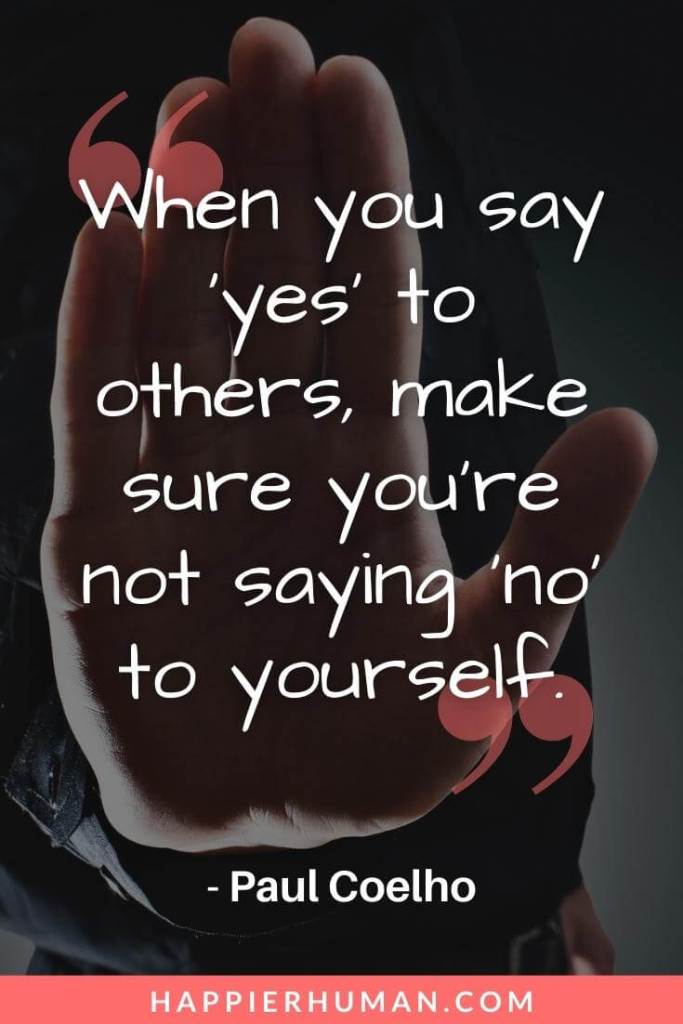
To finish up, here’s a final reminder from writer Paul Coelho.

Let me know in the comments if you’ve any more tips about how to identify dodgy clients, or how to set boundaries as a freelance writer. Many of us only carve out a writing career after learning from bitter experience.

I hope this article helps you to navigate the often murky waters of online writing gigs and overcome the challenges involved.